Read the 2025 evidence
Black Friday 2026 falls on November 27; Cyber Monday is November 30. The completed 2025 event provides planning context while this year’s results are still ahead. It can show where to investigate, but it cannot tell you which offer will be profitable for your catalogue.
The spending figures above are in USD. These are different populations and event windows, so the two spending totals are not directly comparable. Shopify’s global four-day figures are approximate, unaudited GMV, net of refunds and including shipping, duties and taxes. Adobe analyses U.S. online retail transactions. None of these figures measures SaleSwitch performance or forecasts your 2026 results.
Choose a commercial job
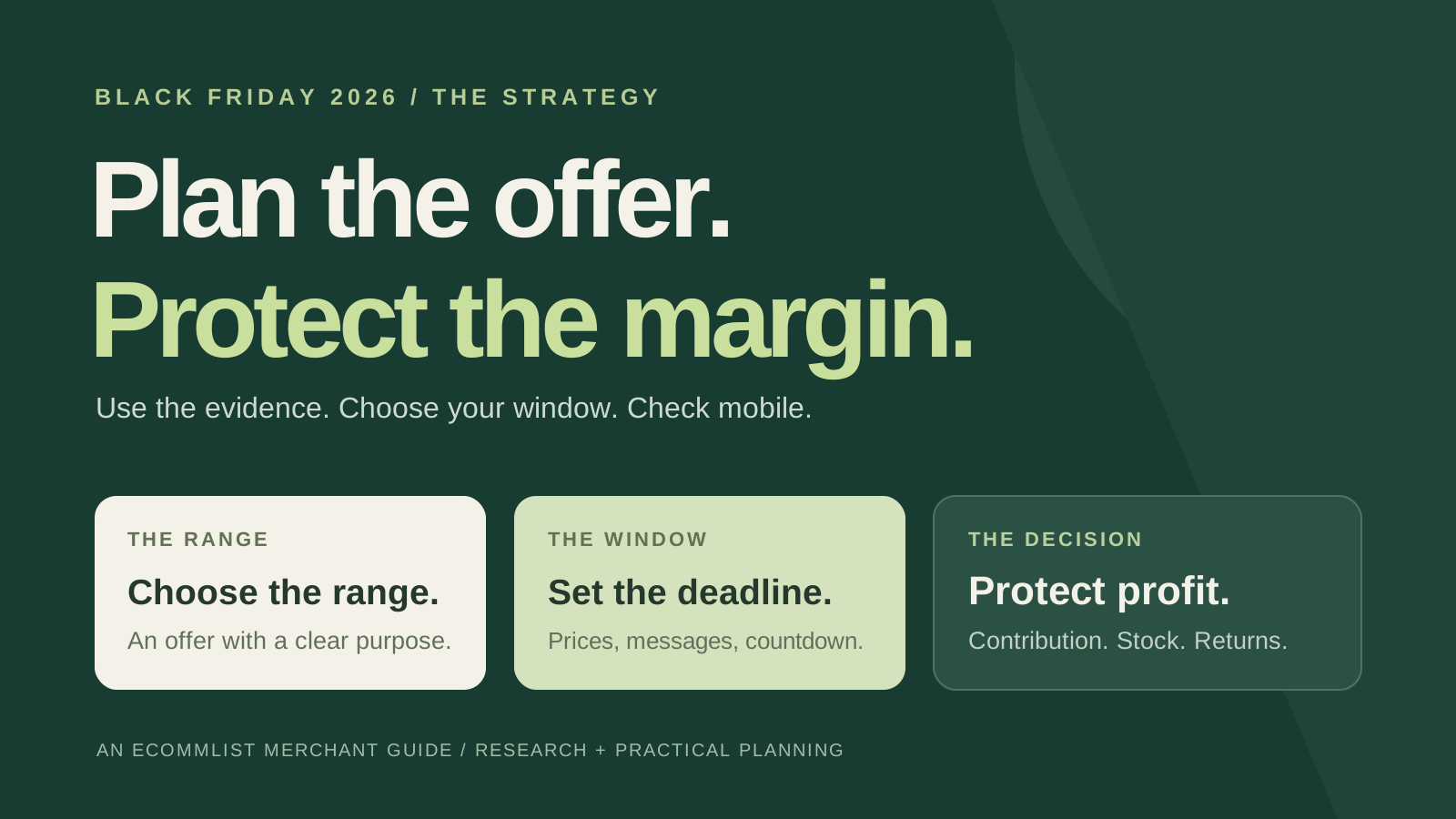
Pick the result your promotion needs to produce before choosing a discount. A store clearing specific seasonal sizes needs a different offer from a brand introducing a new audience to its core range. Write the audience, eligible products, exclusions and contribution target in one brief.
Move selected stock
Consider a focused public markdown on the variants you want to clear. Protect healthy ranges from an unnecessary storewide reduction.
Reward an audience
Consider an eligible-customer offer or code through Shopify’s discount tools. A public base-price markdown does not create private access.
Calculate the expected amount left after variable costs and campaign spend. Use your own return rate, shipping subsidy and product costs. A competitor’s headline percentage does not establish your margin. The fictional contribution example shows how a modest price reduction can raise the volume required to preserve a contribution target.
Make mobile the main journey
Observed spending share, on a 0–100% scale. Source: Adobe’s December 2, 2025 report. This is not a 2026 projection.
Adobe’s mobile finding is a reason to prioritise a small-screen rehearsal in your own store. It describes U.S. Cyber Monday 2025 spending, not every Shopify audience or a guaranteed device split for 2026. Check your own device and conversion data to decide where testing effort belongs.
Open the exact link you will promote on a phone. Can a shopper identify the offer, select an eligible variant, read delivery information and reach the cart without fighting a banner? Test a long product title, an exclusion and any code that might affect the basket. Keep buying controls available while the campaign message is visible.
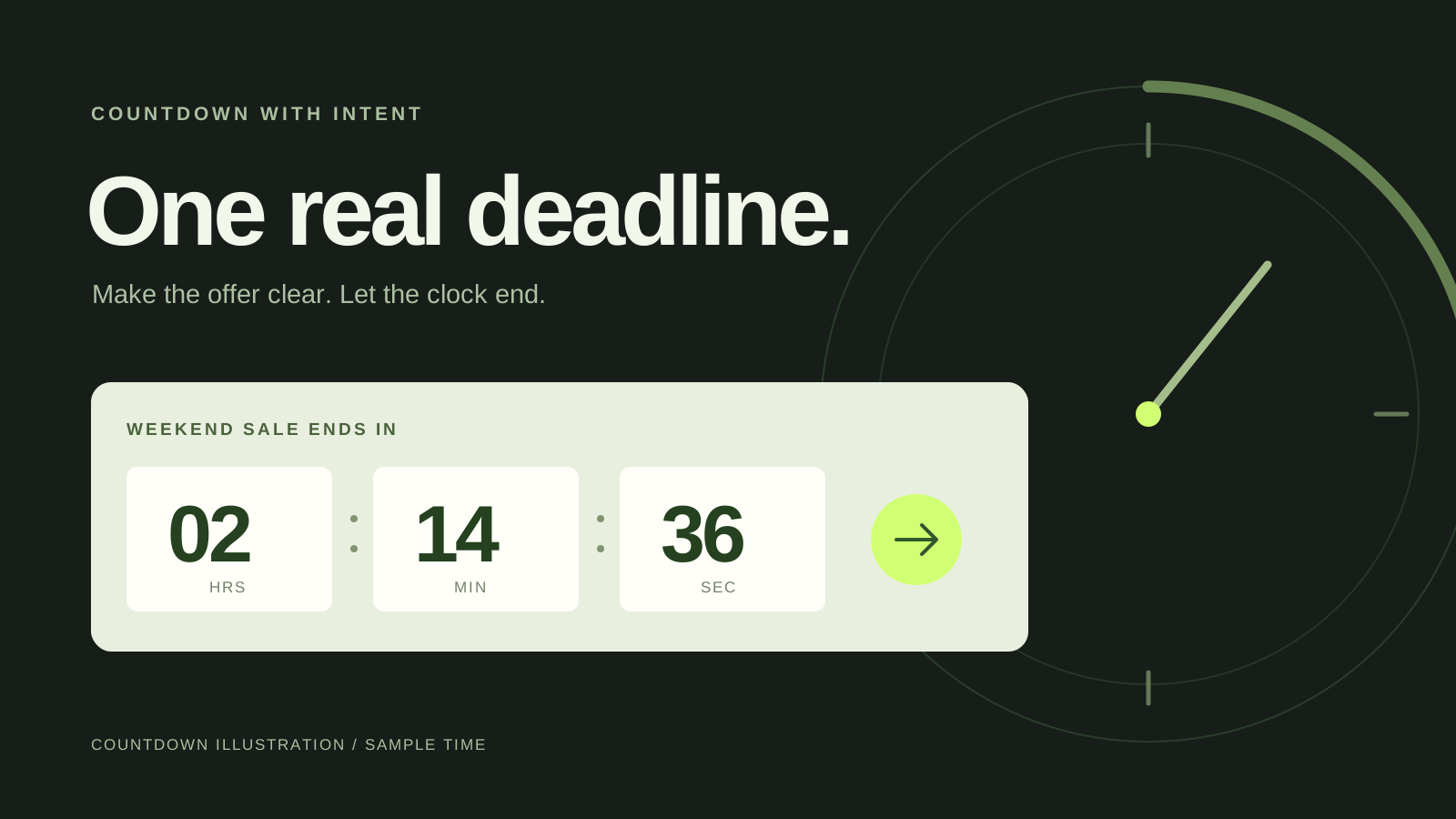
Put the relevant terms near the decision. A clear selected-range offer with a direct destination is easier to evaluate than a broad claim whose exclusions appear only later. Use the countdown placement guide when a real end time is part of the message.
Sequence the campaign
Plan a small number of distinct phases. The example below is a suggested planning sequence, not a demand forecast. Set your own dates and timezone, and do not imply that an offer has ended if you intend to keep the same deal running.
- Before November 27
Explain the range
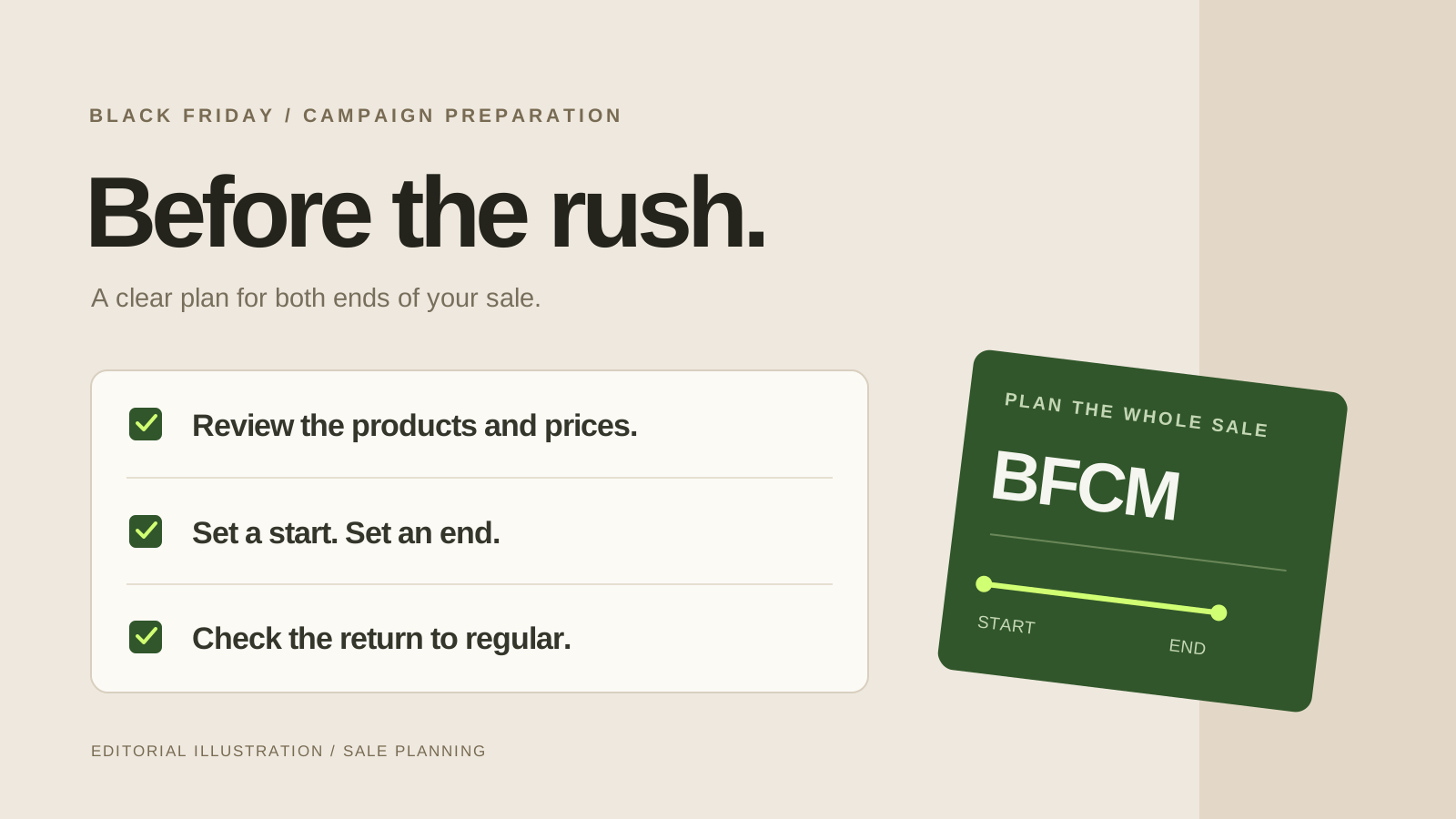
Prepare the destination and explain what will qualify. Check stock, costs and customer questions without changing public prices early by accident.
- Black Friday · November 27
Launch the defined offer
Start the approved window, inspect actual results and confirm the customer journey before widening promotion.
- Weekend · November 28–29
Resolve, then remind
Address failed or skipped changes. Send a relevant reminder with the same terms rather than adding unreviewed discounts.
- Cyber Monday · November 30
Close as promised
Communicate the real deadline. After the window ends, review price restoration, expired messages and any remaining exceptions.
A deeper Monday offer is a separate commercial decision. Model its cost and explain any change honestly; do not let a content calendar silently choose a new selling price.
Use the right price workflow
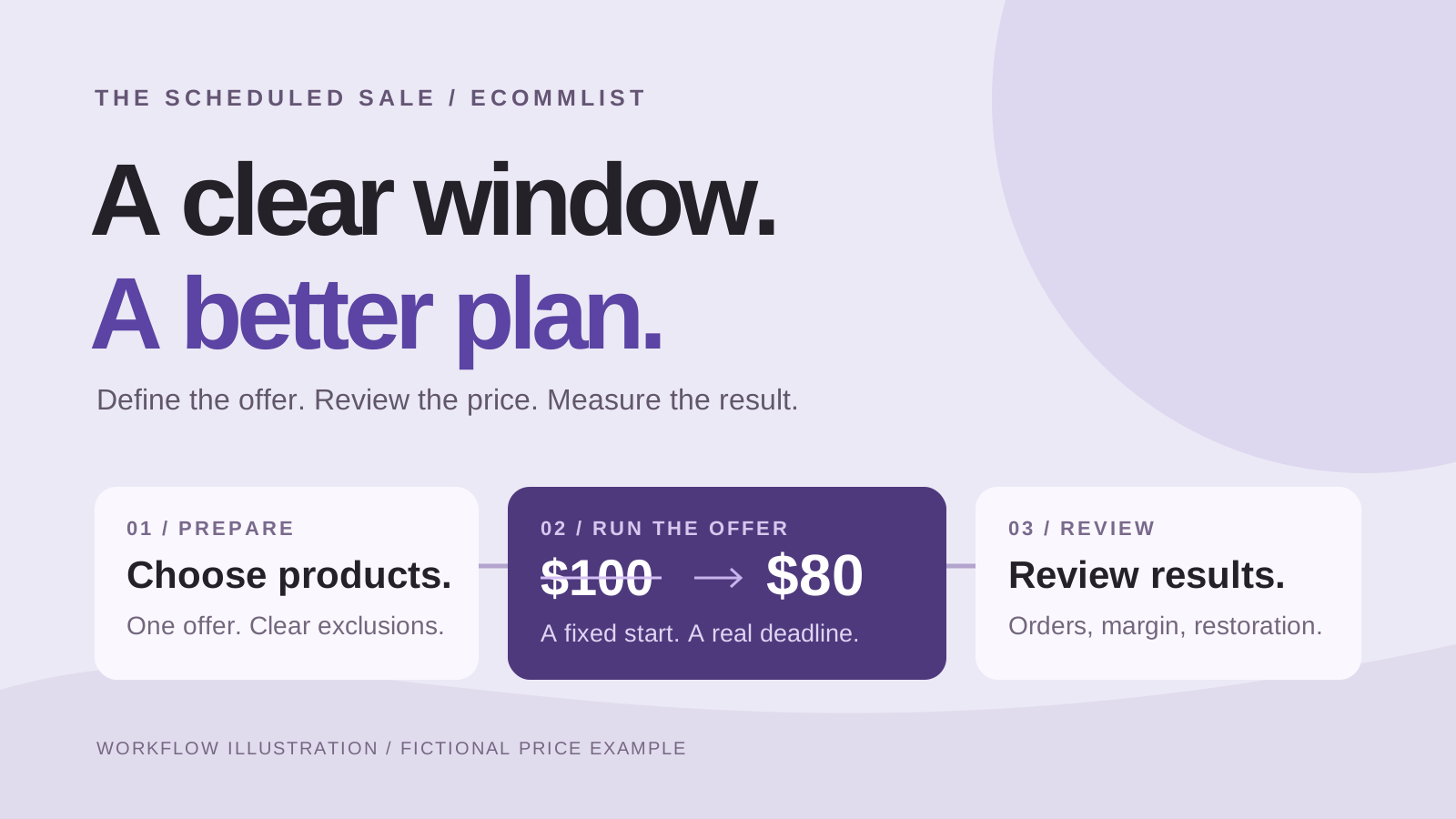
Shopify supports amount-off discounts with active dates. Use that route when the offer depends on eligible customers, basket conditions or codes. For a public catalogue markdown, define the intended variant price pairs and a return path.
SaleSwitch — Sale Scheduler handles scheduled percentage changes to base catalogue prices in shop currency. You review the proposed changes before approval. Optional sale collections and countdowns can explain the campaign; the countdown block or banner still needs placement and saving in the theme editor.
Execution is queued rather than a synchronous catalogue-wide switch. Inspect applied and skipped results. At the end, the app restores acknowledged original pairs when the current pair still matches what it applied, preserving detected later edits for review. Use the operational Black Friday checklist for the detailed launch and restoration checks.
Measure the extra contribution
Write the evaluation plan before launch: completed orders, net revenue after refunds, variable costs, campaign spend and contribution. Review new and returning customers separately when the sample supports it. Save the dates and definitions with the results so next year’s comparison uses the same basis.
Incrementality asks what happened because of the promotion, beyond what would otherwise have happened. A properly isolated randomized holdout can help when your offer and tools allow it. A public catalogue sale can reach a nominal holdout too; withholding only an email mainly tests that message’s additional effect while the reduced price remains available.
When a clean test is impractical, use a documented baseline and treat the answer as directional. Account for weekday mix, paid-traffic changes, stockouts and other offers. Include the post-sale period to look for purchases moved forward, and allow returns to mature before concluding that a revenue spike created a profitable gain.
Start with a reviewable selection
Keep the first campaign small enough for deliberate review. SaleSwitch Free includes two scheduled sales per UTC month and up to 50 variants per sale; Pro is $9.99 USD per month with up to 200 variants per sale. Count the separate price campaigns your plan requires before selecting a tier.
You can explore the fictional SaleSwitch demo without connecting a store, then use the scheduling guide to prepare a real campaign. A strategy becomes usable when the offer economics, customer message and operating plan agree.